How Do You Play Doginal Dogs Legends? Full Rules Explained
DDL GAMEPLAY BETA IS ONLINE! VISIT DDLTCG.COM/PLAY TO TEST IT YOURSELF!
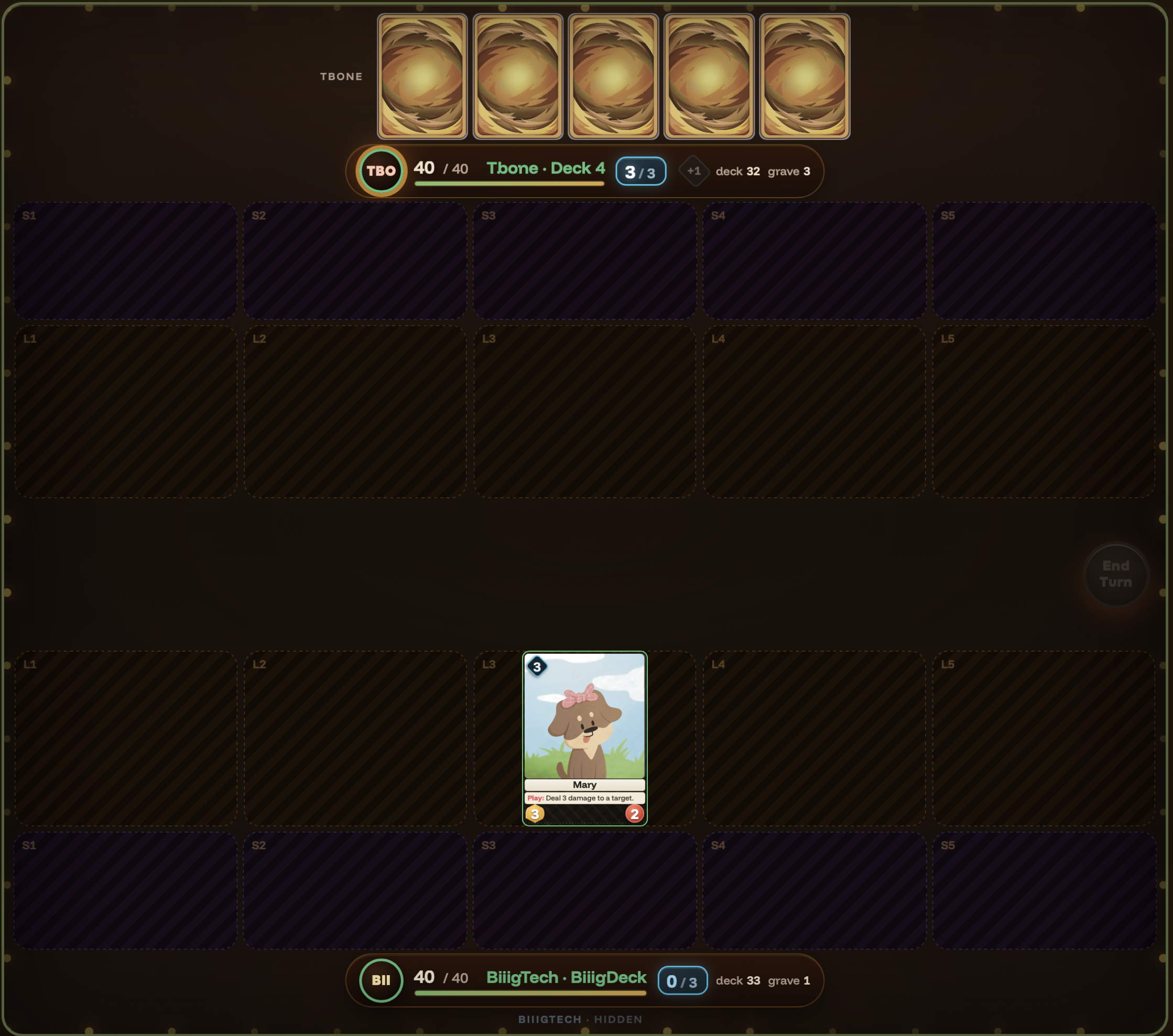
The DDL Battleground! Visit DDLTCG.com/play to go play the game!
Doginal Dogs Legends is a lane-based competitive card game. Both heroes start at 40 health with a 40-card deck, and you win by dropping the enemy hero to 0. You spend mana to play creatures, spells, and traps, and attack with creatures that are ready.
Doginal Dogs has not published a standalone rulebook. Everything below is drawn from the official in-game How to Play reference and the Teach Pack tutorial at ddltcg.com/play, plus beta play. Individual cards are not covered here — Rise of the Pack is still being revealed, and this page deals only with the rules that apply to all of them.
How do you win?
Reduce the enemy hero from 40 HP to 0. You control the bottom hero; your opponent is the top.
That is the only win condition. There are powerful creatures and traps capable of wiping the entire board, but clearing the field doesn't itself win the game — hero health is untouched by it. Board control is a means, not the objective.
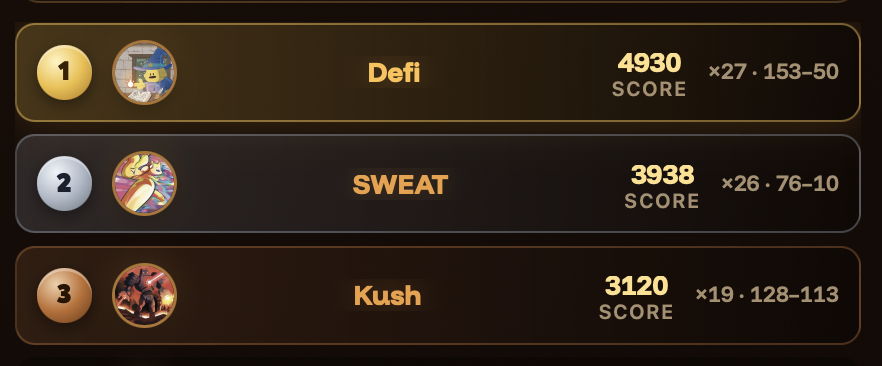
Wizard master Defi (x.com/lil_defi) stopping the leader board of DDL Season 0
What happens on a turn?
Every turn runs the same four steps: mana up → draw → play and attack → end turn.
Start. You gain mana — turn 1 gives 1 crystal, increasing each turn up to a maximum of 10. You draw 1 card.
Main. Play creatures, spells, and traps by paying their cost. Attack with ready creatures.
End. Press End Turn and your opponent plays.
Unspent mana does not carry over. Every turn is a fresh budget, so holding back banks nothing.
What is the DDL Coin?
If you go second, you get the Coin: once per game you may play a card that costs 1 more than your current mana.
That's a subtler compensation than the equivalent in other card games. It doesn't hand you a mana crystal or an extra card — it lets you cheat the curve exactly once, which makes the decision about when to spend it rather than whether. Holding it for the right turn is a real skill expression.
How does the opening work?
Each player draws an opening hand of 4 cards, then one card per turn at the start of their turn.
Hand maximum is 10. Extra draws while your hand is full go straight to the graveyard, so overdrawing burns cards outright.
What are the three card types?
Creatures occupy lanes, attack, and defend. Spells produce effects. Traps are set in advance and trigger in response.
All three are played from hand during your Main phase by paying their cost.
Spell and trap timing varies by card. Some resolve immediately and are spent — a spell that destroys a creature does its job and goes to the graveyard rather than staying on the board. Others persist, amplifying attacks or healing your hero over time.
How is the board laid out?
Each side has two rows of five. L1–L5 hold creatures, and S1–S5 hold spells and traps — ten positions in total per player.
Creatures placed in a lane stay there until they die. Spells and traps that resolve immediately don't occupy a slot once spent; only persistent cards remain in the S row.
The Teach Pack never places anything in the S row, because the tutorial covers creature play only.
How does combat work?
Tap a ready creature of yours — it glows.
Tap a legal target: an enemy creature, or the enemy hero.
Damage trades.
Combat is kill-gated: a creature dies when the damage it takes meets or exceeds its Health. Because damage goes both ways in an exchange, both creatures can die at once — the game calls this a trade, where you destroy the enemy creature but lose yours doing it.
A worked example: a creature with 4 Attack and 1 Health attacks a creature with 1 Attack and 2 Health. The attacker's 4 clears the defender's 2 Health, so the defender dies. The defender's 1 clears the attacker's 1 Health, so the attacker dies too. Both hit the graveyard.
That threshold model rewards knowing exact numbers rather than tracking accumulated damage, and it turns high-attack, low-health creatures into deliberate one-for-one trades rather than lasting board presence.
You can also stack several attackers into one target when legal, which is how you break through a defender no single creature can kill.
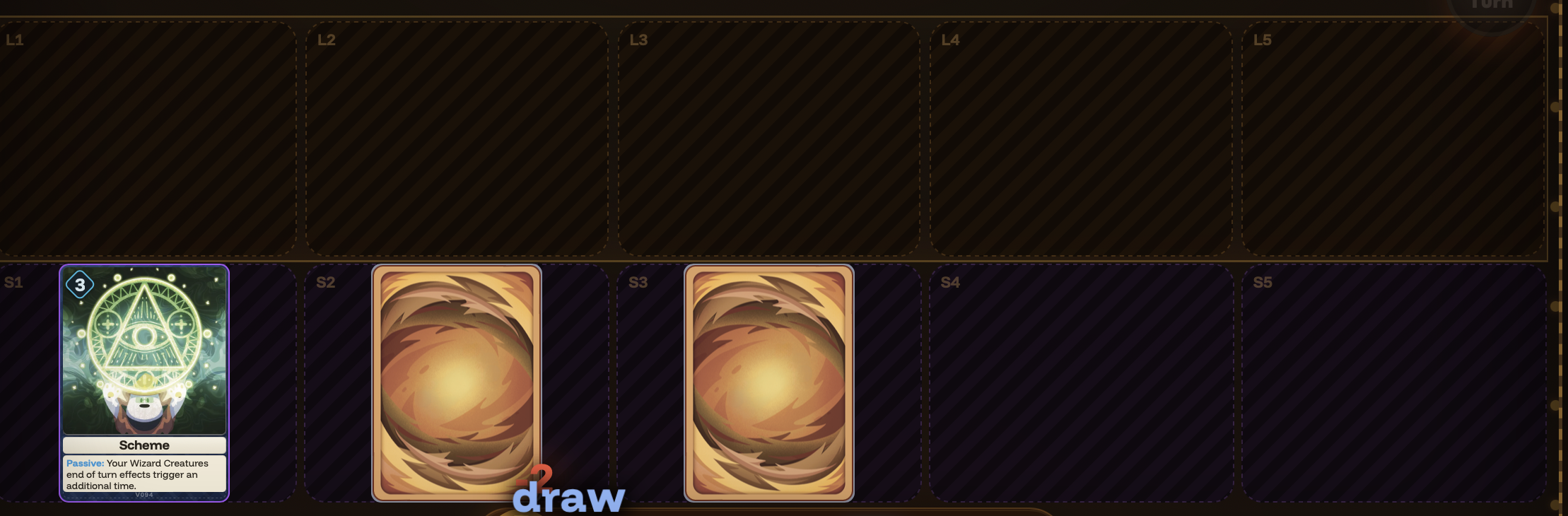
5 slots for Creatures and 5 slots for Spells and Traps
What is summoning sickness?
A creature cannot attack the turn it was played — unless it has Rush, and even then it can only hit creatures, never the hero.
A creature played on an earlier turn is ready and can attack anything legal, including the enemy hero.
So a fresh creature is inert, a fresh Rush creature can trade, and a ready creature can do everything.
What are the keywords?
Seven appear in the official reference: Taunt, Rush, Poison, Play, Death, Haunt, and Passive.
Four apply generally:
Taunt — while it is on the board, it is the only legal target. Enemies cannot reach your hero or your other creatures first.
Rush — can attack enemy creatures the turn it is played, but never the enemy hero that turn.
Play — a one-time effect that fires when the card arrives from hand.
Passive — an ongoing effect that persists while the card is in play.
Poison, Death, and Haunt are tied to Zombie-class synergies rather than being universal mechanics, which is worth knowing if you're reading a card list and wondering why they don't appear everywhere.
Note the distinction the game draws: the large text on a card is its name, while keywords are separate tags underneath. A card's name is not a rules term.
How do classes work?
Five are confirmed: Wizard, Crown, Zombie, Bow, and Pirate.
Decks do not have to commit to a single class. You can mix freely, which makes deck building considerably more open than a hard class restriction would allow — the constraint is the three-copy limit and your mana curve, not your colour identity.
Neutral is not a fourth card type. It means a card isn't locked to a class, and a Neutral card is still a creature, spell, or trap. Heroes can be Neutral too.
Some creatures go further and count as every class at once, which makes them unusually flexible when you're building around a class synergy.
How many copies of a card can a deck hold?
Three. On 40 cards that's a real constraint: maxing every slot would give roughly 13 distinct cards, so most decks run three-ofs for their core and fewer copies of situational answers.
Build your DECK at DDLTCG.COM/play
What game modes are there?
Teach Pack — the guided lesson, recommended once.
Vs Bot — Easy or Advanced AI. Finishing matches earns Miles, which accumulate with time played.
BOOST — both players start at 10 mana. Fast games built around high-cost cards.
Vs Pack (PvP) — Find Match for matchmaking, or Duel with a code for private games. Live games are watchable, though duel-code games can only be joined with the code.
The spectator function matters more than it first appears. It's the piece that makes organised competition and content creation possible, and it's already working in the beta.
What is still undocumented
What happens when a deck runs out
How Arena tiers progress
Official tournament format and any banned or restricted list
This page will be updated as each is confirmed.
DDL.NEWS is an independent, fan-run resource covering Doginal Dogs Legends. It is not affiliated with, endorsed by, or operated by Doginal Dogs. Official announcements are published at ddltcg.com/blog. Written by BOX META, a crypto investor since 2017, Doginal Dogs holder since May 2024, creative director at Crypto Spaces Network, and a Legends beta tester with close to 100 games played.
Last updated: August 13, 2026.
